

Coffee is one of the world’s most beloved beverages, but not many people know the journey those aromatic beans take from farm to cup. The process begins in the lush, sunlit highlands of coffee-growing regions, where dedicated farmers cultivate coffee plants with care and expertise.
Growing Coffee
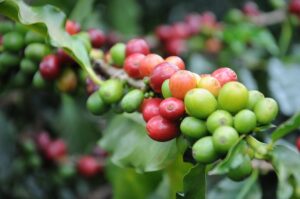
Coffee originates from two main species: Arabica and Robusta. Arabica, known for its smooth and nuanced flavours, thrives at higher altitudes, while Robusta, with its stronger and bolder taste, grows better at lower elevations and is more resistant to pests.
Coffee plants are shrubs or small trees that flourish in tropical climates. They require a combination of warm temperatures, moderate rainfall, and shaded conditions to thrive. Once planted, it takes 3-4 years for the coffee plant to bear fruit, which are called cherries because of their bright red appearance when ripe.
Harvesting the Beans
The cherries contain the prized coffee beans, but getting to them involves meticulous work. Harvesting occurs once a year during the plant’s peak ripening season. The process can be done in two main ways:
- Hand-Picking: This labour-intensive method is commonly used for high-quality Arabica beans. Skilled workers select only the ripest cherries, ensuring the best flavour. While time-consuming, it ensures consistent quality.
- Mechanical Harvesting: Used primarily on larger farms with Robusta plants, this method employs machines to shake the cherries from the branches. Though faster, it can result in a mix of ripe and unripe cherries, impacting overall quality.
Processing the Beans
Once harvested, coffee cherries undergo processing to extract the beans. There are three main methods:
- Washed (Wet) Process: Cherries are pulped to remove their outer layer, then fermented in water to break down the sticky mucilage. This method produces a clean, bright flavour.
- Natural (Dry) Process: Cherries are laid out in the sun to dry whole, which can take weeks. This method results in a sweeter, fruitier cup.
- Honey Process: A hybrid method where some mucilage is left on the beans during drying, resulting in a balanced flavour profile.
Drying and Milling
After processing, the beans are dried to a specific moisture level. This can be done naturally (by sun-drying) or with mechanical dryers. Once dried, the parchment layer covering the beans is removed through milling.

Export and Roasting

The processed beans, now called green coffee, are sorted, graded, and packed for export. They are then roasted to varying degrees, unlocking the rich, complex flavours we love.
The Final Cup
From the careful nurturing of coffee plants to the precise harvesting and processing techniques, every step in coffee production is a labour of love. The next time you enjoy a cup, take a moment to appreciate the incredible journey your coffee has made.
Coffee is more than a drink—it’s a testament to the dedication of farmers around the world.